The Aborigines’ Rights Protection Society: Cape Coast’s Early Stand Against Colonial Power.
Posted by TWR Publications
15 hours ago
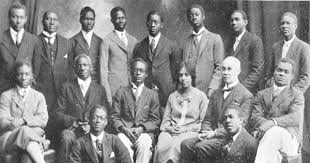
In the earlier articles in this series, we explored how Cape Coast became the intellectual center of the Gold Coast. We saw how schools such as Mfantsipim School and Adisadel College helped educate a generation of thinkers. We also looked at the influence of leaders like J. E. Casely Hayford, whose ideas helped shape early nationalist thinking.
But ideas alone were not enough. At some point, those ideas had to be organized into action. One of the earliest and most significant examples of this happened in Cape Coast in 1897 with the formation of the Aborigines’ Rights Protection Society.
The society was formed in response to a colonial policy known as the Crown Lands Bill. The British government proposed that all lands not directly occupied by individuals should become property of the colonial administration. In practical terms, this meant that vast areas of land traditionally owned by local communities could be taken over by the colonial state.
For many people in the Gold Coast, land was more than property. It was tied to identity, tradition, and the authority of chiefs. The proposed law therefore sparked strong resistance. In Cape Coast, a group of educated elites, lawyers, and traditional leaders came together to oppose the bill. They formed the Aborigines’ Rights Protection Society to defend indigenous land rights and challenge colonial authority.
What made the movement remarkable was its strategy. Rather than relying on violence, the society used legal arguments, petitions, and diplomacy to make its case. A delegation from the society travelled to Britain to present their concerns directly to the colonial government. Their arguments were persuasive, and eventually the Crown Lands Bill was withdrawn.
This was a major victory: It showed that Africans in the Gold Coast could organize politically and successfully challenge colonial policies. It also demonstrated the growing confidence of the educated elite who had emerged from places like Cape Coast.
The success of the society had a lasting impact. It inspired future political movements and strengthened the belief that Africans had the right and ability to influence the governance of their country. In many ways, the Aborigines’ Rights Protection Society represents one of the earliest organized expressions of political resistance in the Gold Coast. And once again, the story leads us back to Cape Coast. The town that nurtured education and intellectual debate had now become a center of organized political action.
Tags
The Aborigines’ Rights Protection Society
J. E. Casely Hayford
Crown Lands Bill
Cape Coast
Featured News


Category
Tourism & Diaspora
Sports
News
Music
International News
Entertainment & Arts
Editorial
Culture & Tradition
Business & Tech
Have Any Question?
If you have any questions, feel free to contact us:
031 229 5629
info@twradiogh.com