The Oguaa Asafo Companies origin
Posted by Enoch Nyamson
4 hours ago
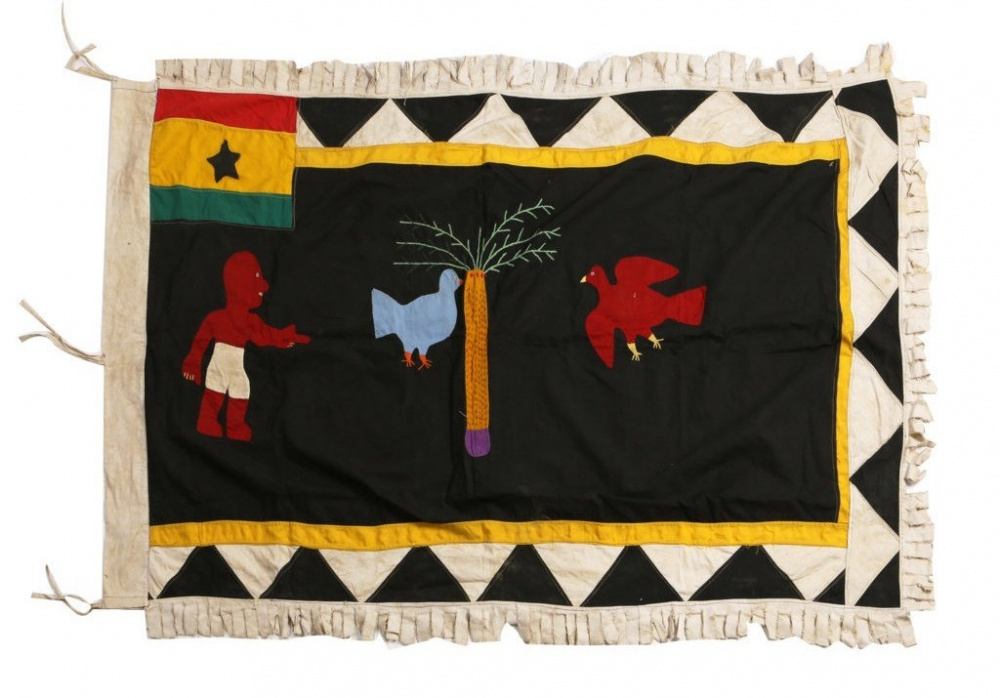
The dominant traditions of the indigenous inhabitants of Oguaa assert that they originated from Fetu, about north of Cape Coast. The site has been identified as that of the present-day Efutu. The Efutu state like its sister state of Eguafo, was founded by the Guan- the undisputed aborigines of Ghana.
Legend even has it that one of the early kings of Fetu was a veracious eater of crabs which flourished in the marshy low lying areas around the hills of the present Cape Coast. The settlement was accordingly named “KOTOKURABA” viz ‘crab rivulet’.
The early beginning of the town was, certainly, related to the existence of crabs in the area and the effigy of the crab became the “TRADITIONAL EMBLEM”. With time, another collection of reed huts sprang up nearer to the beach which developed into active commercial center where salt and other commodities were exchanged.
This new settlement became known as “GWA or IGWA (OGUAA). There was rapid increase in population following the influx of the people from Efutu-when W.J. Mueller was a chaplain in the Dutch fort, Fredrickdborg, 1661-1669, the king of Fetu was called Aduafo, a powerful ruler who was feared and honored by his people. In 1693, the Fetu kingdom was defeated by the allied forces of Assin and Asebu.
The Efutuhene Nana Essifie Kuma transferred his capital from Efutu to Oguaa. On arrival, the new migrants settled in three distinctive areas, viz- Bentsil, the area of highland behind the newly built castle (they are regarded as the Oman-Safoa- the key to Oguaa state); Nkum, the sloping ground on the westbank of the stream below Benstil; then Instin, the rising ground on the eastside of the stream (also regarded as the Omanhene’s own bodyguard).
Later, a number of ambitious and influential families broke away and founded a chain of fishing villages on the east coast. They include Legu, Duemba-Mumford and Winneba (Simpa) family groups. The real expansion of Oguaa when the Swedes first settled at Cape Coast in 1652, they built a trading lodge, Carolusborg. In 1653 before embarking on the Castle itself. In 1657 they introduced men and women from the Leeward coast chiefly from Benin in Nigeria, to train as bricklayers, coopers, blacksmiths and artisans.
With these ‘strangers’ they built the Castle. Upon completion of the contract they were assigned the land near the Castle and formed themselves into No.5 Company under the name “Brofu-Mba or Brofu-Nkoa” (white men’s servants)
The influx of Europeans in an unhealthy climate, and far from their home, naturally led to the birth of a large number of mulattoes who became the No. 6 Company or “Akrampa” which means ‘mulatto’
Finally, the Danes brought more artisans from the Accra district and settled them along the coast, a little east of the town. These became No. 7 Company. “Amanful” or “Oman fofro”, referring to a ‘new state’. The No. 1 Company Benstil, sprang from the No. 2 Company or “Anafu (lower town).
The No. 3 Company Nstin originally settled on land near the Castle, and when the Castle was being built, they were ordered to move farther afield, hence Nstin (to stretch out). No. 4 Nkum, No. 5 Brofu-Mba, No. 6Akrampa, and No. 7 Amanful which system was the outstanding nature of political organization in the 19th century.
Recruitment of members was patrilineal. The inhabitants of Oguaa, therefore, seem to be an amalgamation of the so-called ‘foreigners’ and different Fante tribes (of which Abura is the most important), and mostly the aboriginal stool on the male-line until the destoolment of Kofi Emissa in 1851-1856(whose predecessor was Egyir also known as Bosopo (1801-1851).
The destoolment of Kofi Emissa in February 1856 due to fractional fight paved the way for Kweku Attah to become the first occupant of the paramount stool on female-line in March 1858(Kweku Attah 1856-1858), Kweku Enu or John crentsil(1858-1865), Kwesi Attah(1865) and Kojo Mbrah I, draw from the Ebiradzi royal family-Fiekessim.
By the time, Oguaa had reached the apogee of its prestige and prosperity, it began to take appearance of a minor colonial capital, but still dependent on the colonial government in Sierra Leone until in 1874 after the decisive defeat of Asante in the Anglo-Asante war of 1874 that Gold Coast became a fully-flegded colony and Oguaa became the first capital; however in 1877, the seat of government was moved to Accra.
Earlier in 1872, the Fante inhabitants had influenced the colonial mentors to ban the “FetuAfahye” alleging that frequent clashes between the various Companies were inimical to peace and progress even the Governor himself had described it as “ THE BLACK CHRISTMAS’. Gradually, the “Borbor-Fante Ahobaa Afahye” was banned until the 1910’s when the “Tufuhen Kwame Edu” caused the “Fetu Afahye” to be reinstated in view of asserting their “Afutu-Guan” origin.
Moreover, the Fetu Afahye is an aboriginal cult meant to propitiate the Earthgod-Asaase Efuwa, and it certainly shows that the deity who they honor is older than the Fante invasion (similarly, the citizens of Kyebi in Akyem-Abuakwa have, since the arrival of their ancestor fromAdanse, celebrated the Ohum festival of the Okere-Guan aborigines they met on the land.
Written By Elicot Nana Kweku Okyere
Tags
Cape Coast
Oguaa Asafo Companies
Featured News





Category
Tourism & Diaspora
Sports
News
Music
International News
Health Tips
Events
Entertainment & Arts
Editorial
Culture & Tradition
Business & Tech
Have Any Question?
If you have any questions, feel free to contact us:
031 229 5629
info@twradiogh.com