Deep-rooted structural inefficiencies, rising debt obligations are burdening Ghana’s energy sector - CEDA Boss
Posted by Enoch Nyamson
7 hours ago
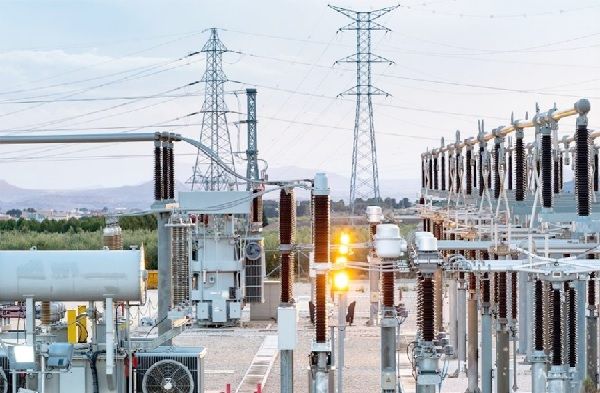
Executive Director of the Centre for Extractives and Development Africa (CEDA), Samuel Bekoe, has cautioned that despite some progress under the International Monetary Fund (IMF) -supported reforms, Ghana’s energy sector remains burdened by deep-rooted structural inefficiencies and rising debt obligations.
According to IMF programme documents and Ghana’s Energy Sector Recovery Programme (ESRP), accumulated liabilities within the power sector continue to stem from legacy debts, excess power generation capacity payments, foreign exchange losses, fuel procurement costs, and weak revenue mobilisation systems.
Mr. Bekoe revealed that government allocations of approximately GH¢1.4 billion toward fuel purchases, operational costs, and legacy debt payments underscore the severity of the crisis. He further estimated that Ghana’s cumulative energy sector debt exposure between 2023 and 2026 could reach nearly US$9 billion, making it one of the largest fiscal risks facing the country.
“The power sector privatisation programme is partial, and it will not solve the structural problems within the energy sector,” Mr. Bekoe said during the national dialogue, convened by ActionAid Ghana under the theme of economic justice and sustainable recovery beyond the IMF Extended Credit Facility (ECF).
“The energy sector debt is one of the largest debts confronting the country, and it remains a major risk despite Ghana’s planned exit from the IMF programme,” he noted.
According to the World Bank, inefficiencies across Ghana’s electricity value chain continue to cost the country hundreds of millions of dollars annually. Collection losses and distribution inefficiencies within the Electricity Company of Ghana (ECG) have historically exceeded 25 percent, significantly above global utility efficiency benchmarks.
For her part, the Executive Director, Transparency International Ghana, Mrs. Mary Awelana Addah, said that Ghana must break its repeated cycle of IMF dependence.
She makes the point that the natural resource-rich West African country will be able to wean itself off the IMF dependency through stronger accountability and prudent economic management.
The forum brought together policy experts, civil society actors, and economic analysts to assess Ghana’s post-IMF prospects and the structural risks confronting the economy.
Ghana’s growing energy sector debt continues to threaten the country’s economic recovery and social protection spending despite ongoing reforms under the International Monetary Fund (IMF) programme, experts have warned at ActionAid Ghana’s Economic Justice Dialogue.
Madam Addah said “ActionAid Ghana’s Economic Justice Dialogue is a timely conversation. Ghana has gone to the IMF 18 times. It is high time we ensure our national targets are met."
"We must do a better job in public financial management. We have the laws, but the challenge is enforcement,” she stated.
Recently, the Government of Ghana announced the successful conclusion of its Extended Credit Facility (ECF) financial bailout programme with the International Monetary Fund.
A statement issued by the Minister of Government Communications, Felix Kwakye Ofosu, on Friday, May 15 said that this was a milestone that represented the restoration of macroeconomic stability and debt sustainability, well ahead of the original timeline.
Following the derailment of the IMF financial bailout programme at the end of 2024, the statement said, the government of President John Mahama in 2025 acted decisively to bring it back on track and to recalibrate it by implementing a frontloaded fiscal consolidation, bold expenditure rationalisation, and strong structural reforms.
These efforts, it said, have delivered tangible results: inflation has reduced significantly, the cedi has strengthened markedly, public debt as a share of GDP has declined sharply, and economic growth has rebounded strongly.
" Ghana’s sovereign credit ratings have improved significantly from restricted default (Junk Status) to ‘B’ with a positive outlook, representing five distinct rating levels upgrades. This reflects improved fiscal performance, normalised creditor relations, stronger external buffers, and renewed market confidence.
"Ghana’s gross international reserves have risen to an all-time high, reaching approximately US$14.5 billion by February 2026, almost 6-months of import cover.
"These foreign exchange reserve buffers provide Ghana with the capacity to withstand external shocks and stand on its own feet," it said.
It added that this announcement marks the definitive end of Ghana’s financial bailout relationship with the IMF.
"Government is exceedingly grateful to the people of Ghana for their sacrifices, resilience and forbearance. The Government also expresses deep gratitude to its bilateral creditors, the Official Creditor Committee (OCC) and external and domestic investors for their collective sacrifice. 12. Going forward, Ghana will engage with the IMF Policy Coordination Instrument (PCI).
"The PCI is a form of Technical Assistance engagement with the IMF. It is a non-financing instrument designed to help countries implement economic reforms, signal commitment to policies, and unlock financing from private investors and other development partners. 14. For the avoidance of doubt, the PCI does not provide financial bailout, but will offer continuous capacity development, confidence boost to the market, and deliver a catalytic effect for fresh financing to Ghana."
This Non-bailout Technical Assistance Policy Coordination Instrument (PCI) will complement government’s effort to achieve Investment Grade rating.
The statement said that achieving Investment Grade rating will significantly lower sovereign and private sector borrowing costs, attract long-term institutional investors, increase foreign direct investment, and unlock cheaper financing for critical infrastructure development and private sector growth.
"Ultimately, this engagement will support government’s effort to accelerate sustainable development, create jobs and raise living standards for all Ghanaians." it said.
Tags
Executive Director
e Centre for Extractives and Development Africa
Featured News

Category
Tourism & Diaspora
Sports
News
Music
International News
Health Tips
Events
Entertainment & Arts
Editorial
Culture & Tradition
Business & Tech
Have Any Question?
If you have any questions, feel free to contact us:
031 229 5629
info@twradiogh.com