Beyond Restitution: What Africa Stands to Gain Economically and Culturally from the Return of Its Stolen Heritage
Posted by TWR Publications
11 hours ago
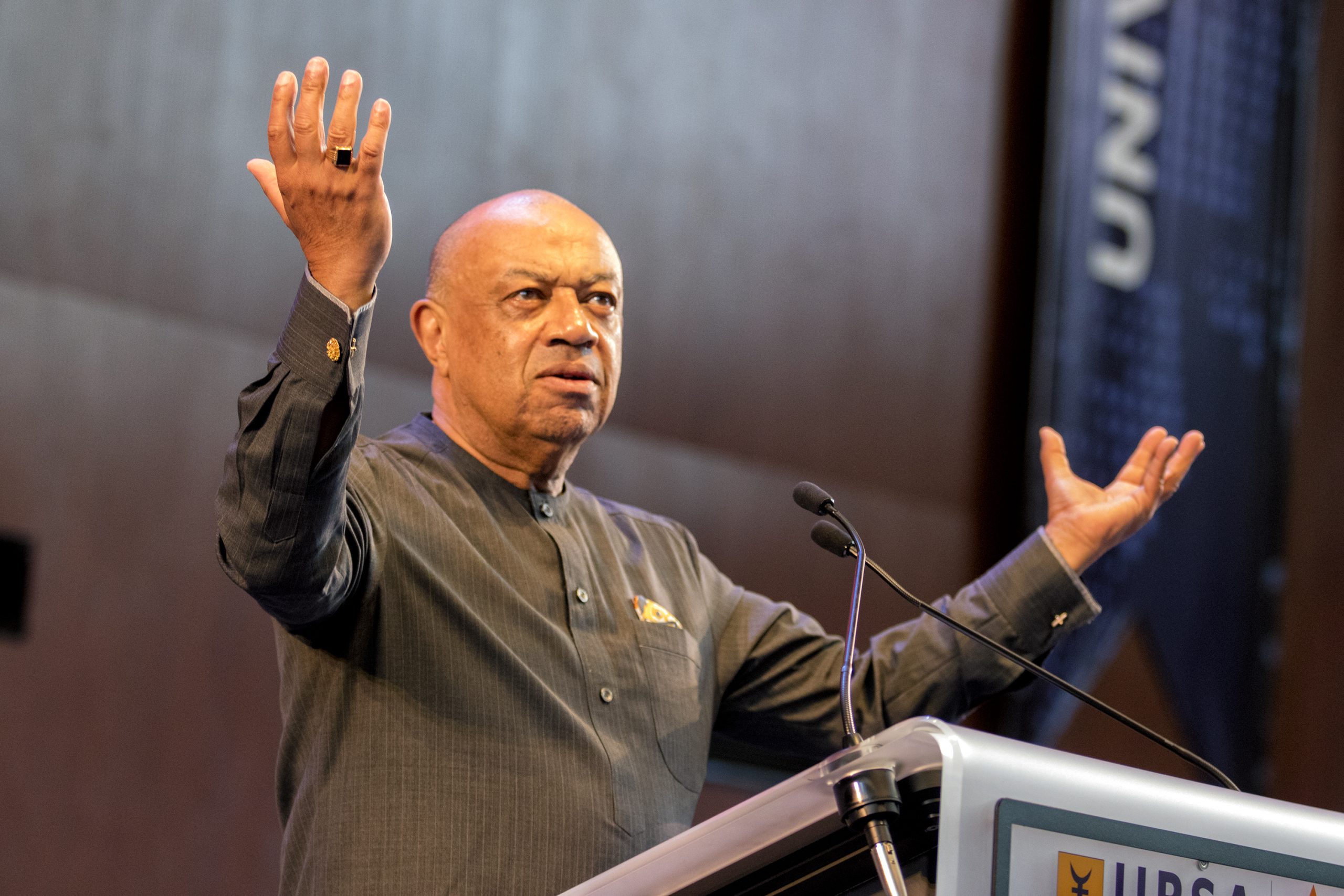
Lord Paul Boateng’s demand for the return of looted African artefacts raises a bigger question: What if Africa could reclaim not only its cultural treasures, but also the knowledge, tourism opportunities and economic value associated with them?
When Lord Paul Boateng called for the full return of looted African artefacts from the British Museum, he reignited a debate that has occupied historians, traditional authorities, governments and cultural institutions for decades. But beyond the question of whether these objects should be returned lies another, perhaps equally consequential, question: What has Africa lost by having significant parts of its cultural heritage displayed and interpreted thousands of miles away from the societies that created them?
And more importantly, what could African economies gain if these treasures were returned, preserved and presented within the communities and countries from which they originated? Speaking at a Chatham House event on October 15, 2026, Lord Boateng criticised the British Museum’s approach to restitution, describing it as the “largest depository of stolen goods known to man.”
He called for the return of Asante gold from Ghana, Benin Bronzes from Nigeria and sacred Ethiopian Tabots, questioning the adequacy of arrangements that allow institutions to lend certain objects back to their countries of origin instead of permanently transferring ownership. His remarks invite an examination not only of historical injustice, but also of cultural identity, economic opportunity and the institutions required to turn African heritage into a sustainable asset.
When the owner becomes the borrower:
In 2024, 32 historical Asante objects held by the British Museum and the Victoria and Albert Museum were brought to Ghana under loan arrangements with the Manhyia Palace Museum in Kumasi. The objects, comprising 15 from the British Museum and 17 from the V&A, included royal regalia associated with the Asante Kingdom, some of which had been removed during British military campaigns in the nineteenth century.
Their return was an important cultural occasion, allowing generations of Ghanaians to encounter objects that had been absent from their homeland for approximately 150 years. Yet the arrangement exposed a fundamental contradiction in the restitution debate. Where an artefact is established to have been looted during colonial conquest, should the institution that subsequently acquired it retain the authority to determine the terms under which the descendants of its original custodians may access it?
For the Asante people, these objects are not merely decorative gold pieces or museum exhibits. They embody aspects of political authority, craftsmanship, spiritual traditions and historical memory. Their significance cannot be adequately measured by the market price of the precious metals from which they were made.
A ceremonial object removed from its original setting loses more than its geographical location. It may also lose the ceremonies, oral accounts, social relationships and systems of knowledge that explain its meaning.
This is why the distinction between a loan and restitution matters. A loan can restore temporary physical access without resolving the underlying question of ownership.
Full restitution, by contrast, seeks to address who has the legitimate authority to possess, preserve and make decisions about the object. There are legal complications. British legislation restricts the circumstances under which institutions such as the British Museum and V&A may permanently dispose of objects in their collections.
But legal restrictions, however significant, do not necessarily settle the ethical questions surrounding how those objects were acquired. If existing legislation prevents the correction of an acknowledged historical injustice, should the debate not also consider whether the legislation itself requires reform?
The economics of displaying the world’s heritage:
The British Museum provides an interesting starting point for examining the economic possibilities of cultural heritage. According to its annual report for the financial year ending March 2026, the institution welcomed approximately 6.5 million visitors and recorded total income of around £150 million. That income includes government support, donations, commercial activities and other revenue sources. It would therefore be inaccurate to describe the entire amount as money earned from ticket sales or from African artefacts.
The museum’s permanent collection is generally accessible without an admission fee, and its holdings represent cultures and civilisations from across the world. Nevertheless, the figures illustrate the scale of economic activity and institutional investment that can surround a major cultural destination.
Museums attract visitors, sustain employment, create demand for hospitality services and contribute to the international reputation of their host cities. Visitors who travel to London for cultural experiences may also spend money on hotels, restaurants, transportation, retail and other attractions. These wider expenditures are not necessarily reflected in the museum’s own accounts.
This raises an important question for Africa:
If historical objects can contribute to attracting international audiences in European cities, what possibilities might emerge if more of those objects were displayed in the countries where their histories began? Could Ghana, Nigeria, Ethiopia and other African countries develop cultural destinations capable of attracting visitors who wish to experience these histories within their original geographical and social environments? The answer deserves serious economic investigation rather than a simple assumption that returning artefacts would automatically reproduce the British Museum’s visitor numbers or revenue.
Could returned artefacts generate millions for Ghana?
Consider the possibility of a major heritage museum in Kumasi, developed around Asante history, royal collections, traditional craftsmanship and carefully documented accounts of the kingdom’s political and cultural development. Such an institution could offer more than glass cabinets containing historical objects.
Visitors could encounter exhibitions explaining the origins and evolution of the Asante Kingdom, the significance of its political institutions, its relationship with neighbouring societies, the history of colonial conflict and the continuing role of traditional authority. These experiences could be supported by educational programmes, guided tours, documentary productions, cultural performances, research facilities and opportunities to engage with local artisans.
The economic possibilities extend beyond the museum itself:
A visitor travelling to Kumasi may require accommodation, transportation, food, local guides and other services. Businesses supplying these services could benefit from an increase in cultural tourism. To illustrate the potential, suppose a heritage attraction received 200,000 visitors annually and generated an average of US$15 per visitor through admissions, guided experiences, merchandise and other museum services.
That would represent US$3 million in annual gross revenue. At 500,000 visitors, with average museum revenue of US$20 per person, the figure would rise to US$10 million. These are hypothetical scenarios, not forecasts for any existing Ghanaian museum. They exclude construction costs, operating expenditure, conservation, financing and other obligations.
They nevertheless demonstrate why cultural heritage should be examined as a potential economic resource rather than treated exclusively as a ceremonial concern. The more important calculation may concern the additional spending generated across the destination.
For Ghana, a successful heritage attraction could create opportunities for local enterprises, including small businesses that might otherwise have limited access to international tourism markets. But achieving this would require more than recovering artefacts. It would demand professional management, dependable infrastructure, international marketing, conservation expertise and a deliberate effort to connect tourism revenue to surrounding communities.
Why should the world visit Africa to understand Africa?
For generations, international visitors have encountered significant aspects of African history through museums, libraries and academic institutions outside the continent. These institutions have made important contributions to research and public education. However, the geographical separation between objects and their originating societies can affect how history is understood.
An Asante royal object displayed in London may be interpreted primarily through the lens of imperial collecting, artistic craftsmanship or nineteenth-century military history. The same object in Kumasi can also be understood through living traditions, indigenous languages, community memory and the institutions to which it remains culturally connected.
The distinction is not necessarily that one museum must tell a false story and another a true one. Rather, the place and people interpreting an object can influence which aspects of its history receive attention. African communities should have greater authority to explain their own heritage, particularly where that heritage was removed through conquest or coercion.
This could provide visitors with experiences that are difficult to reproduce elsewhere. Someone interested in Asante history could encounter the relevant objects alongside the places, institutions and traditions that shaped their meaning. Similarly, the history of the Benin Kingdom could be interpreted through Nigerian institutions and communities, while Ethiopia’s sacred heritage could be understood within its appropriate religious and cultural setting.
Importantly, not every sacred object should become a tourist attraction. Some cultural and religious materials require restricted access, and their custodians must have a decisive voice in determining appropriate treatment. Restitution should strengthen cultural authority, not simply transfer objects into a new commercial system.
Beyond individual museums: An African heritage network:
The possibilities become even more significant when considered across the continent. Africa possesses an extraordinary range of archaeological sites, royal histories, religious traditions, artistic achievements and cultural landscapes. Yet these assets are often promoted separately, with limited coordination between countries and institutions.
What if African governments, museums, universities and tourism authorities developed a coordinated network of heritage destinations? A visitor interested in African kingdoms and civilisations could explore Asante history in Ghana, the Benin Kingdom in Nigeria and other historical centres across the continent.
Such a network could support joint exhibitions, shared research, professional training, digital archives and coordinated international promotion. It could also encourage longer journeys across multiple destinations, potentially distributing visitor expenditure among several African economies.
This need not require one central African museum or the removal of objects from their rightful communities into a new continental collection. A more appropriate model may be a network of independently governed institutions cooperating on conservation, research, exhibitions and tourism development while respecting the ownership and cultural authority of originating communities.
The African Union, regional bodies, universities and national cultural institutions could potentially contribute to such an initiative. However, the model would need to be developed through agreements that protect local ownership, avoid political disputes over custody and ensure that smaller communities are not excluded from the benefits.
The question of preparedness:
There is another side to the restitution debate that African governments cannot afford to ignore. Are we investing sufficiently in the institutions that would preserve, research and display returned artefacts? Some African museums already possess significant professional expertise, and it would be inaccurate to suggest that the continent lacks the capacity to care for its heritage. Nevertheless, the quality and resources of cultural institutions vary considerably. Conservation requires trained specialists, appropriate storage conditions, documentation, security and sustained financial support.
A museum must also be accessible and relevant to the public. It should not become a facility that international visitors admire while the surrounding community remains disconnected from its purpose. Schools should be able to use museums as extensions of the classroom. Researchers should have opportunities to study collections. Young people should be encouraged to understand the histories and traditions of their communities.
Investment in cultural infrastructure should therefore accompany restitution efforts. But preparedness must not become an excuse for retaining objects acquired through looting. Where additional conservation capacity is needed, partnerships can help develop it without making foreign ownership a permanent condition. The question should be how to support responsible restitution, not how to use institutional inequalities to indefinitely postpone it. Reclaiming history also means reclaiming the narrative
The debate extends beyond economics:
When communities lose access to objects that embody their history, they may also lose opportunities to transmit knowledge between generations. For many young Africans, the histories of their societies are encountered primarily through textbooks, foreign documentaries or accounts shaped by colonial perspectives.
The return of significant cultural objects could create new opportunities to document and communicate those histories from within African societies. Museums could collaborate with historians, traditional authorities, writers, filmmakers, musicians, educators and digital creators to produce accessible cultural content.
This could include publications, audiobooks, films, exhibitions, educational materials and digital experiences developed in both African and international languages. Such initiatives would allow African heritage to circulate globally without requiring every audience to physically visit the continent. They could also provide economic opportunities for the creative industries.
The objective should not be to replace one narrow historical narrative with another. It should be to strengthen Africans’ capacity to research, interpret and communicate their own histories while remaining open to rigorous scholarship and international exchange. Cultural confidence becomes more meaningful when supported by knowledge, institutions and opportunities for participation.
Who should benefit when heritage becomes business?
The economic case for restitution must confront a further question. If returned artefacts help generate millions of dollars through tourism, who receives the benefits? It would be possible to develop an impressive museum, attract international visitors and still leave nearby communities with little improvement in their livelihoods. That outcome would undermine one of the strongest arguments for connecting heritage to development. Cultural tourism should therefore be linked to local employment, entrepreneurship, skills development and transparent management of revenue.
Communities should have opportunities to participate in decisions about how their heritage is presented and commercialised. Artisans could benefit from markets for responsibly produced cultural goods. Local guides could receive professional training. Young people could find employment in research, conservation, hospitality and media production.
Universities and technical institutions could develop programmes connected to museum management, restoration, tourism technology and cultural documentation. The success of a heritage destination should consequently be measured not only by visitor numbers or ticket revenue, but also by the economic and educational opportunities it creates. In this sense, restitution could become part of a broader development strategy.
Restitution is not conditional on profitability:
Despite the economic opportunities, one distinction must remain clear. The legitimacy of returning looted cultural property does not depend on whether its country of origin can generate substantial revenue from it.
A sacred object does not become less deserving of restitution because it cannot attract tourists. Nor should an African country be required to demonstrate that its museums can match the visitor numbers or financial resources of European institutions before its claim to an unlawfully taken object is considered.
The questions of rightful ownership and economic potential are related, but they are not interchangeable. Restitution concerns historical circumstances, legal claims, ethical responsibilities and the rights of communities. Economic development concerns what societies may subsequently choose to do with the heritage returned to them. The first should not be made dependent on the second.
From historical justice to economic agency:
Lord Paul Boateng’s intervention presents African countries with an opportunity to broaden the conversation.
The demand for restitution must remain firmly rooted in historical justice. But it can also encourage serious discussion about how African societies invest in their cultural institutions, develop heritage tourism and create new opportunities around their history.
Ghana, for example, already possesses internationally recognised heritage destinations, including its coastal forts and castles, as well as living traditional institutions and festivals. Connecting these assets through stronger infrastructure, research, storytelling and tourism services could produce benefits that extend beyond individual museums.
The return of cultural treasures would add another important dimension to that opportunity. Yet the greatest achievement would not simply be the recovery of objects that have spent generations abroad. It would be the development of institutions and economic systems that allow African societies to preserve their heritage, interpret their histories and benefit meaningfully from the global interest in their cultures. The British Museum’s financial performance should not be treated as proof of how much Ghana or any other African country would earn from returned collections.
It should instead prompt a more ambitious question about the value of cultural institutions and the possibilities that remain underdeveloped across the continent. If the world considers African history valuable enough to preserve, study and travel thousands of miles to experience, should Africa not be equally determined to build the institutions and economies through which that history can be experienced at its source?
Ultimately, the question is not merely whether Africa can recover its stolen treasures. It is whether Africa can reclaim greater authority over the stories those treasures tell, the institutions that preserve them and the opportunities they create for future generations.
By: Nana Kojo Dadzie,
(Producer, TW Radio 88.9)
Tags
Lord Paul Boateng
Beyond Restitution
Featured News

Category
Tourism & Diaspora
Sports
News
Music
International News
Health Tips
Events
Entertainment & Arts
Editorial
Culture & Tradition
Business & Tech
Have Any Question?
If you have any questions, feel free to contact us:
031 229 5629
info@twradiogh.com